Landslide Risk Management

Regulators Quiz

This module of the website is aimed at the Regulator who have the responsibility for setting risk criteria, administering planning controls and approving development proposals under the requirements of specific planning controls or a policy.

The format of the module is for a series of Questions relating to the understanding required by the Regulator in respect to a number of aspects relating to the implementation of a landslide-zoning scheme, policy requirements and the approvals process.
Question 5 of 10

5. What are the different types of zoning I might consider?

  • Only Susceptibility zoning
  • Only Hazard Zoning
  • Only Risk Zoning
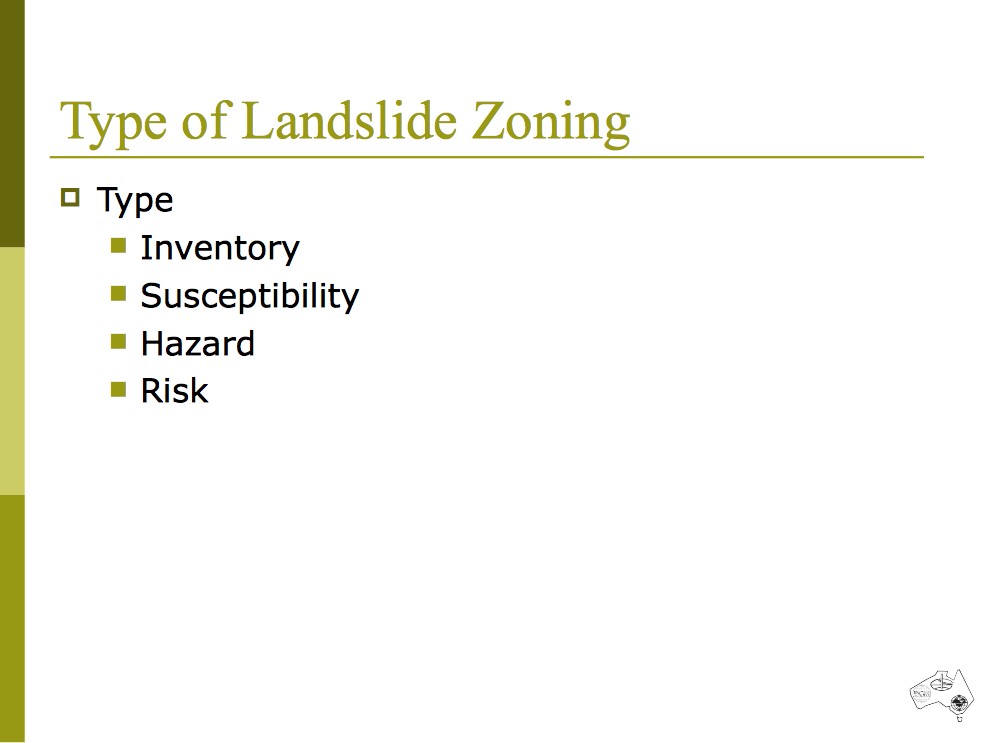
  • Susceptibility, Hazard and Risk Zoning

Depending on the information and data held by a regulator a number of choices exist for zoning selection.

5. What are the different types of zoning I might consider?

The different types of landslide zoning are as follows:

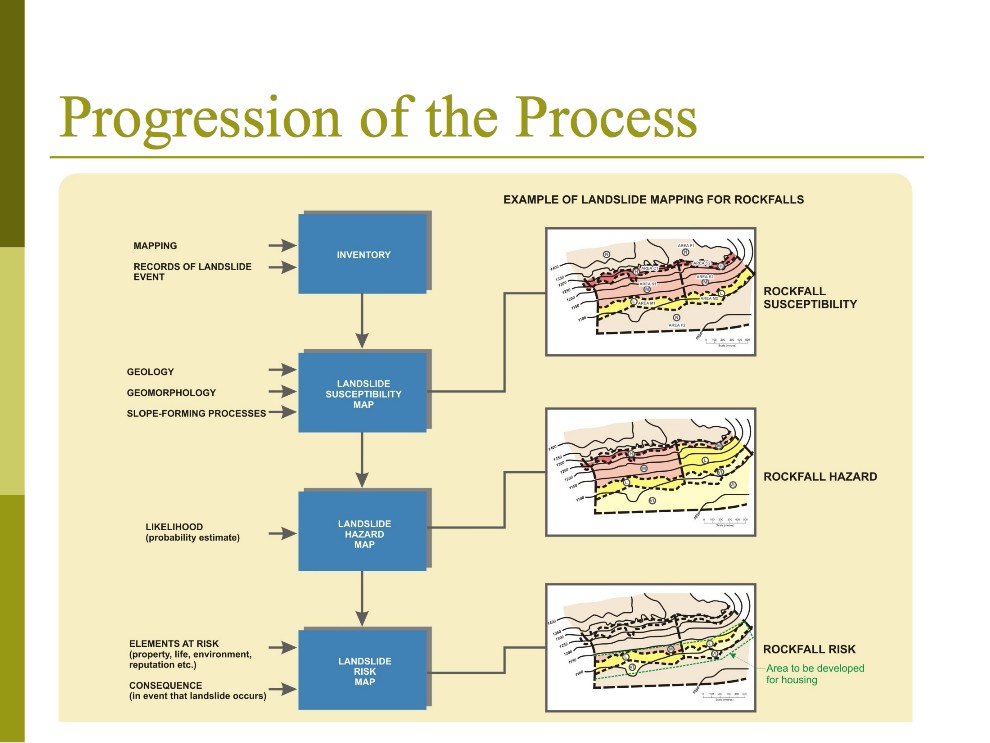
Landslide Susceptibility Zoning involves the classification, volume (or area) and spatial distribution of existing and potential landslides in the study area. It may also include a description of the travel distance, velocity and intensity of the existing or potential landsliding. Landslide susceptibility zoning usually involves developing an inventory of landslides, which have occurred in the past together with an assessment of the areas with a potential to experience landsliding in the future, but with no assessment of the frequency (annual probability) of the occurrence of landslides. In some situations susceptibility zoning will need to be extended outside the study area being zoned for hazard and risk to cover areas from which landslides may travel on to or regress into the area being zoned. It will generally be necessary to prepare separate susceptibility zoning maps to show landslide sources and areas onto which landslides from the source landslides may travel or regress.

Landslide Hazard Zoning takes the outcomes of landslide susceptibility mapping, and assigns an estimated frequency (annual probability) to the potential landslides. It should consider all landsliding, which can affect the study area including landslides, which are above the study area but may travel onto it and landslides below the study area, which may retrogressively fail up-slope into it. The hazard may be expressed as the frequency of a particular type of landslide of a certain volume or landslides of a particular type, volume and velocity (which may vary with distance from the landslide source) or, in some cases, as the frequency of landslides with a particular intensity where intensity may be measures in kinetic energy terms. Intensity measures are most useful for rock falls.

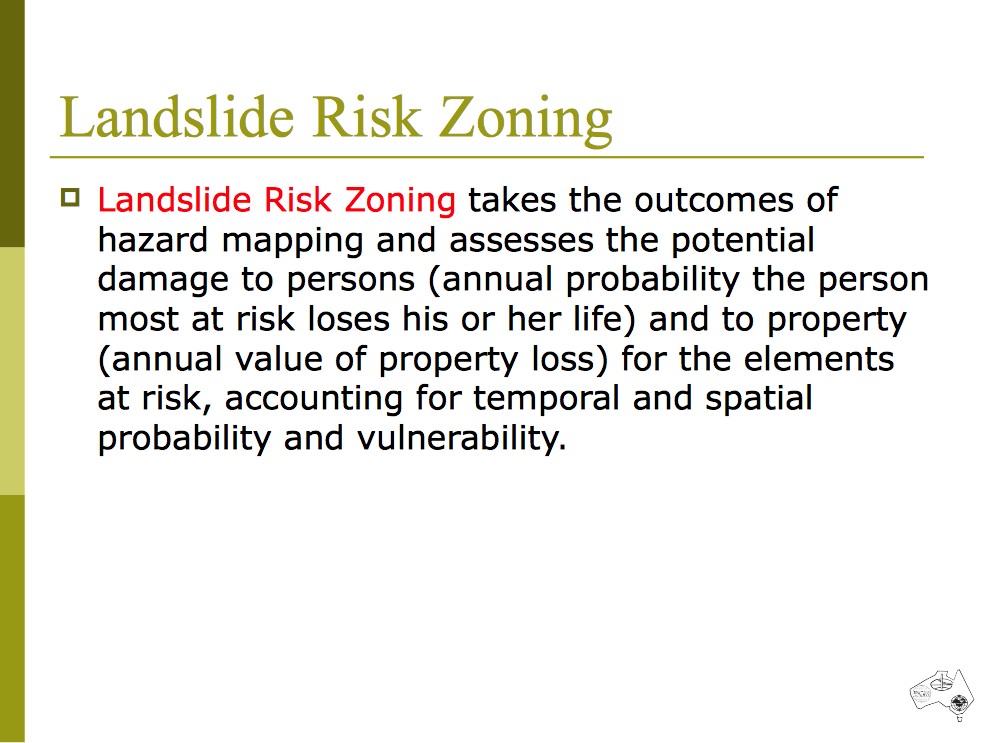
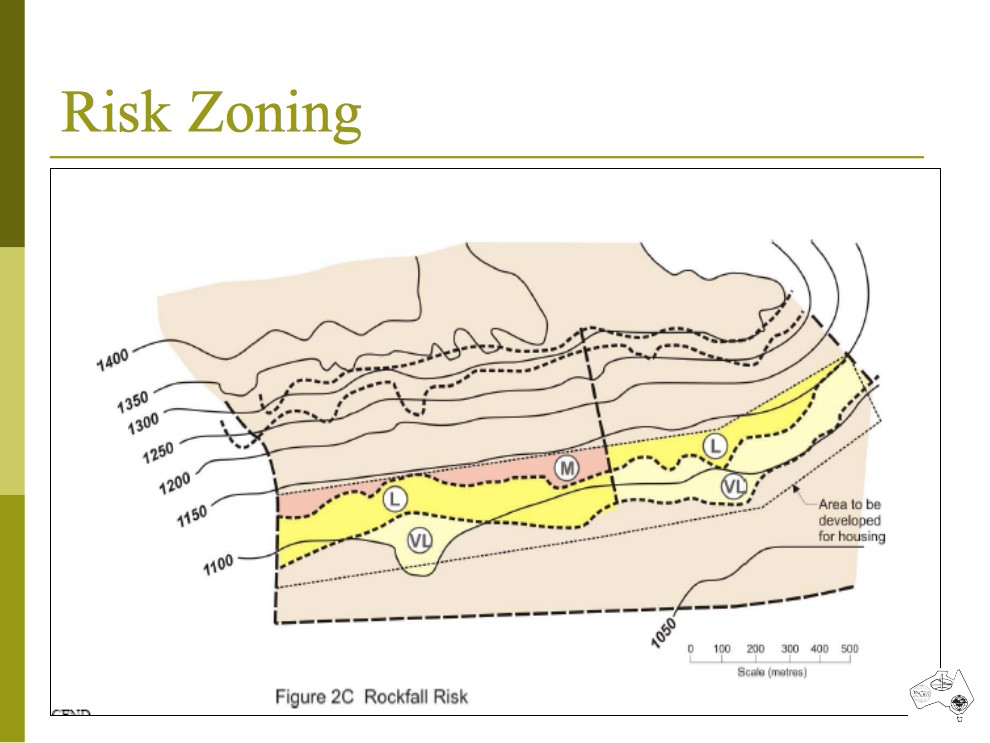
Landslide Risk Zoning takes the outcomes of hazard mapping and assesses the potential damage to persons (annual probability the person most at risk loses his or her life) and to property (annual value of property loss) for the elements at risk, accounting for temporal and spatial probability and vulnerability.

AGS 2007a (pages 16-17)


Australian Geomechanics Society Downloads